
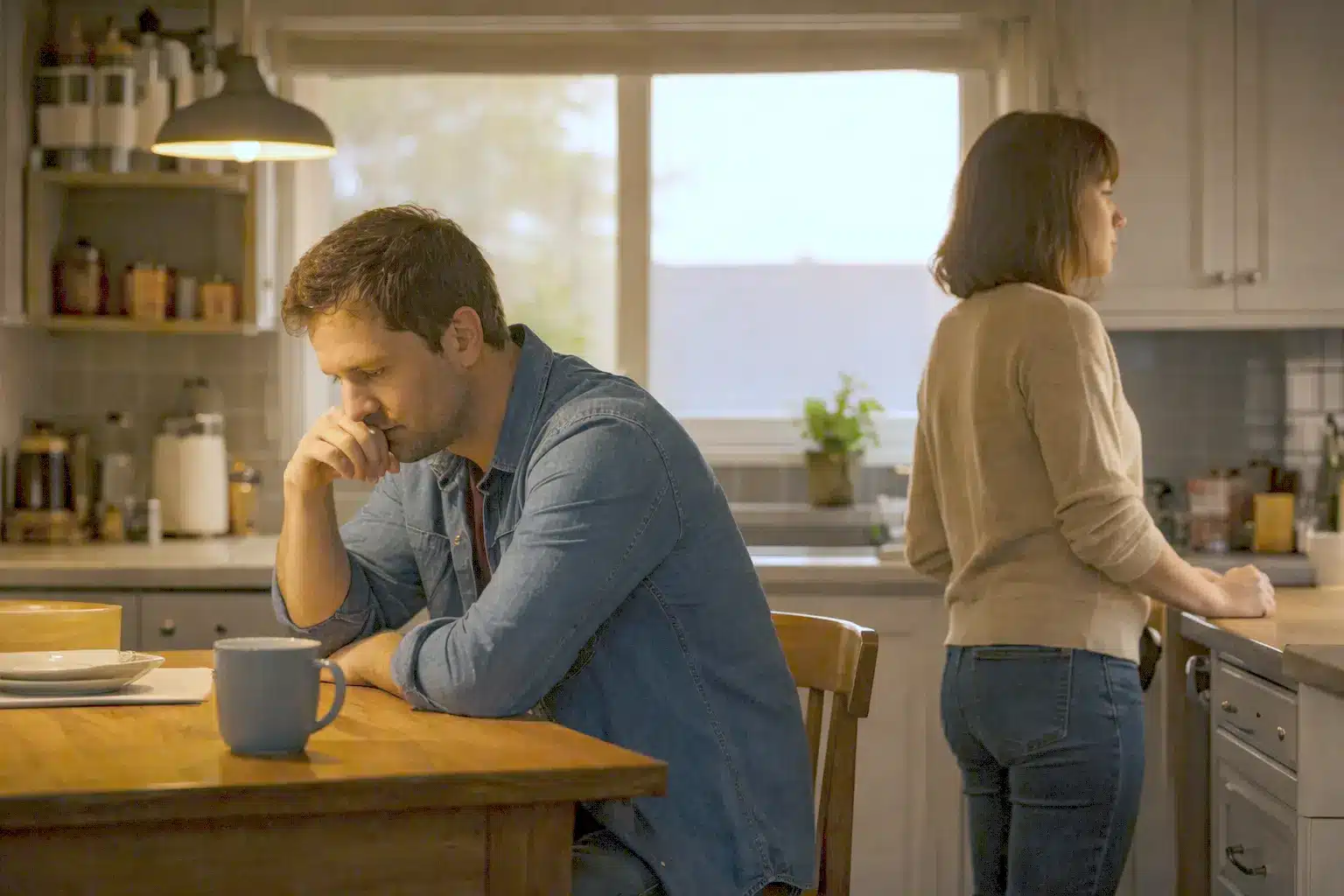
Most couples do not end because of what they argue about. They end because of what happens after, in the quiet space where something has already closed and neither person knows how to reopen it without making things worse.
It is almost never the fight itself that does the damage. It is what lingers afterward. The tone that stays in the room. The pause that stretches too long. The moment when one of you decides it is safer to move on than to risk staying with what is still raw.
The Moment Everyone Skips
The hardest part is not the argument. It is the return. Coming back asks you to step into the exact place your body wants to avoid, the place where you felt misunderstood, exposed, or suddenly unsure of your footing. It asks you to face the possibility that you might try again and still not be met, that you might soften and find nothing there to receive you.
So most couples skip it. They smooth things over, act normal, and tell themselves it was not that important, or that bringing it up would only make things worse. Life continues, schedules fill, responsibilities take over, and the lack of repair gets absorbed into the background of daily life.
But something changes quietly. Not enough to name, not enough to confront. Just enough to make the next reach feel a little riskier than the last.
What the Body Learns Instead
After enough moments like this, hesitation starts to feel familiar. You pause before speaking, softening what you say until it barely resembles what you actually felt. From the outside, this can look like emotional intelligence. From the inside, it often feels like managing yourself so that the relationship does not tip.
There is less aliveness, less desire, and a growing sense that you are no longer being met where you actually live.
Why Return Feels So Dangerous?
Return is not hard because people do not care. It is hard because they do.
Coming back means staying present without control. It means not knowing how the other person will respond and choosing to show up, anyway. It means resisting the urge to defend, justify, or disappear long enough to let contact happen again.
For many people, that kind of exposure feels intolerable, especially if past attempts to return were met with dismissal, misunderstanding, or more distance. The body remembers those moments even when the mind wants to believe this time could be different.
So avoidance starts to feel sensible. Distance starts to feel like self-respect.
When Repair Gets Replaced
Instead of repair, couples build substitutes that look functional but feel hollow. They focus on logistics instead of impact. They resolve schedules instead of moments. They explain rather than reveal. Politeness replaces presence, and efficiency stands in for intimacy.
Nothing is overtly wrong, which makes the loss harder to name. The relationship keeps working, but it stops feeling like a place where truth can land without consequence.
What a Real Return Actually Looks Like
A real return does not begin with the topic that caused the rupture. It begins with contact.
Not contact as performance or resolution, but contact as presence. The kind that does not try to fix the moment or prove a point, but simply re-enters it.
It sounds less like an explanation and more like exposure. Naming what took over in you, without turning it into a verdict about the other person. Letting yourself be seen where you were scared, overwhelmed, or unsure, without demanding reassurance in return.
This kind of return does not guarantee closeness. But it creates the conditions for it.
If You Tend to Reach
If you are the one who moves toward conflict, repair often asks you to slow down rather than push through. To let the truth come out without urgency carrying it. To name what happened inside you without making your partner responsible for settling your fear.
It is not about wanting less. It is about letting desire speak without pressure doing the talking.
If You Tend to Pull Back
If you are the one who moves away, repair often asks you to stay visible instead of reasonable. To let the other person know you did not disappear because you stopped caring, but because you did not know how to stay.
It is not about having the right words. It is about not vanishing when things get uncomfortable.
When Only One of You Returns
Sometimes one person is willing to come back, and the other is not ready yet. Return still matters. Not as pursuit or persuasion, but as consistency. The repeated choice to remain reachable, even when it is not reciprocated immediately, is itself a form of repair. It teaches the relationship’s nervous system that safety is still possible here.
What Quietly Decides the Future of a Relationship
The real question is not whether you communicate well or understand each other deeply. It is what you do when something breaks.
Do you move on? Do you manage yourself? Or do you return?
The way you handle these moments becomes the emotional architecture of the relationship. Not the big conversations or the promises. But the small, repeated choices made when something feels off and no one is watching.
Over time, those choices teach your body what love costs here, and whether staying open is safer than closing down. And once that lesson is learned, the relationship rarely feels the same again.
Somatic Practice: The Return
This practice is for after a moment of rupture, a fight that ended without resolution, a silence that stretched too long, or a conversation where one of you closed before it was finished. You are not trying to revisit the argument. You are practicing the one move most couples skip: the return.
Find a quiet moment, ideally within twenty-four hours of the rupture while the body still remembers it. Sit down and place both feet on the floor. Take three slow breaths.
Bring your attention to your chest. Notice whether it feels open or closed right now. Do not try to change it. Just observe. A closed chest after conflict is not a sign that something is wrong with you. It is your nervous system doing exactly what it was designed to do: protect you from further exposure.
Now ask yourself one honest question: what am I still carrying from that moment? Not what your partner did. What you are holding. It might be a feeling of being misunderstood. It might be the sting of something that was said. It might be a quiet shame about how you responded. Let whatever is present be present without editing it.
Place your hand on your chest and stay with that feeling for a few breaths. You are not trying to resolve it. You are simply acknowledging that it is there, that it matters, and that you are willing to feel it rather than bypass it.
Now ask a second question: What would I need to say to my partner to re-enter the moment honestly? Not to reopen the argument. Not to prove a point. Just one true sentence that names where you actually are. Something like: I am still sitting with what happened and I do not want it to stay between us. Or: I pulled back because I got scared, and I do not want you to think I stopped caring.
You do not have to say it perfectly. You do not have to say it tonight. But let yourself feel what it would be like to say it. Notice whether your chest softens even slightly at the thought.
That softening is the return beginning in your body before it becomes words. That is the signal your nervous system sends when it is moving from protection back into presence.
Practice this after every rupture, even small ones. Not as a technique to manage the relationship, but as a way of teaching your body that repair is possible here. That reaching is not always dangerous. That the person across from you is someone you can come back to.
Over time, the gap between rupture and return gets shorter. And a shorter gap is what changes a relationship from defended to safe.
A Note on This Series
This series was not written to teach you how relationships work. There is no framework to memorize, no checklist to follow, no moment where everything clicks and stays that way.
It was written to slow you down long enough to notice what usually gets skipped.
How love changes shape.
How protection quietly replaces connection.
How couples do not fall apart in explosions, but in pauses, hesitations, and moments that feel too small to matter.
How repair is not a skill you perform, but a risk you either take or avoid.
If something in these pieces felt familiar, uncomfortable, or hard to name, that was not an accident. Familiarity is often the first signal that a pattern is operating, not because
you are doing something wrong, but because your nervous system learned a way to survive closeness.
You do not need to decide anything after reading this series. The only invitation here is awareness. Noticing what you reach for when things feel off, and what that reach has been costing you. The rest unfolds from there.
If something in this series landed in a way that felt personal and you want support learning how to return, I offer a complimentary clarity call. We can look together at what happens in your body after rupture and what becomes possible when repair stops feeling so dangerous. You can book that here.
